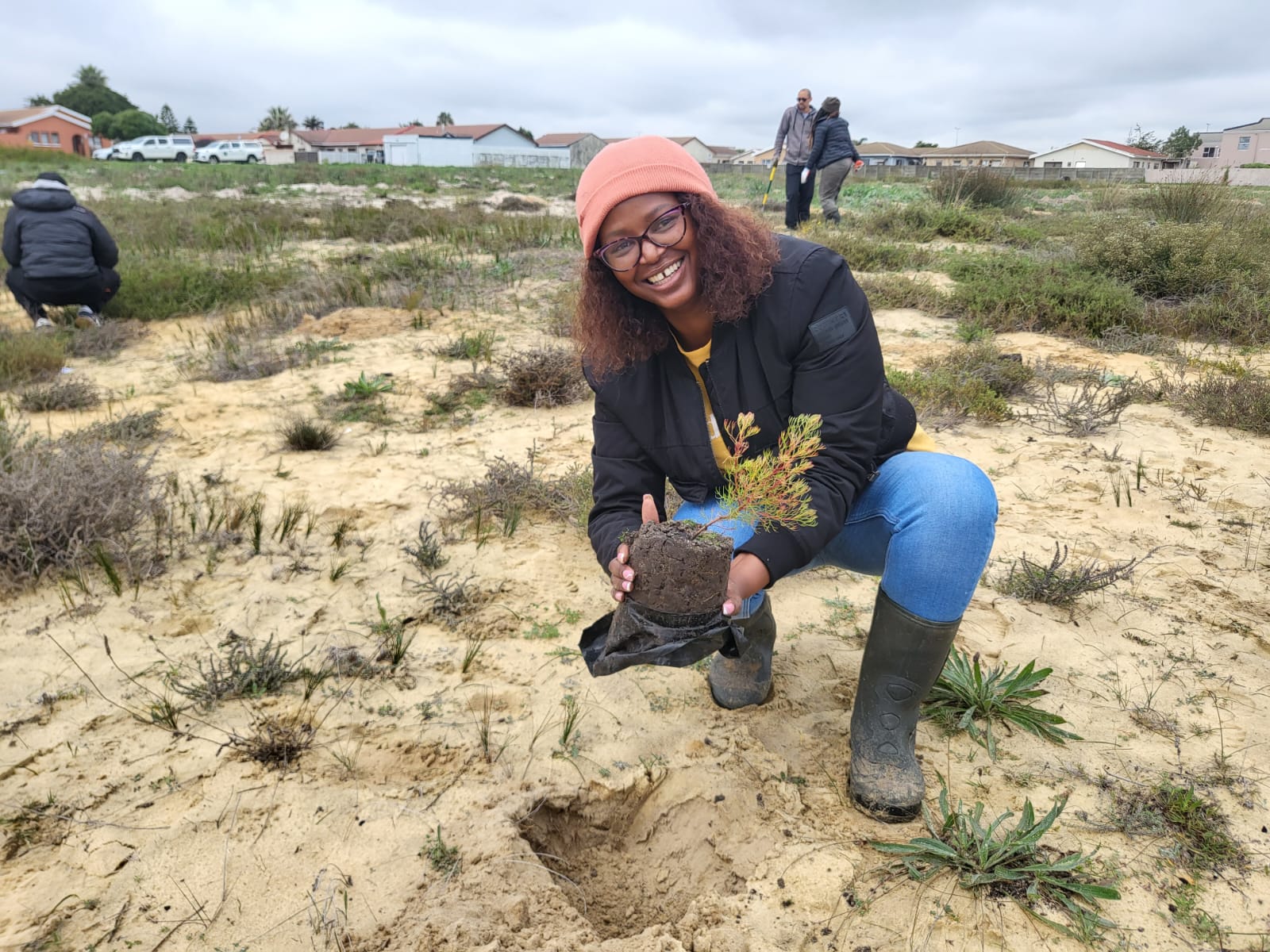
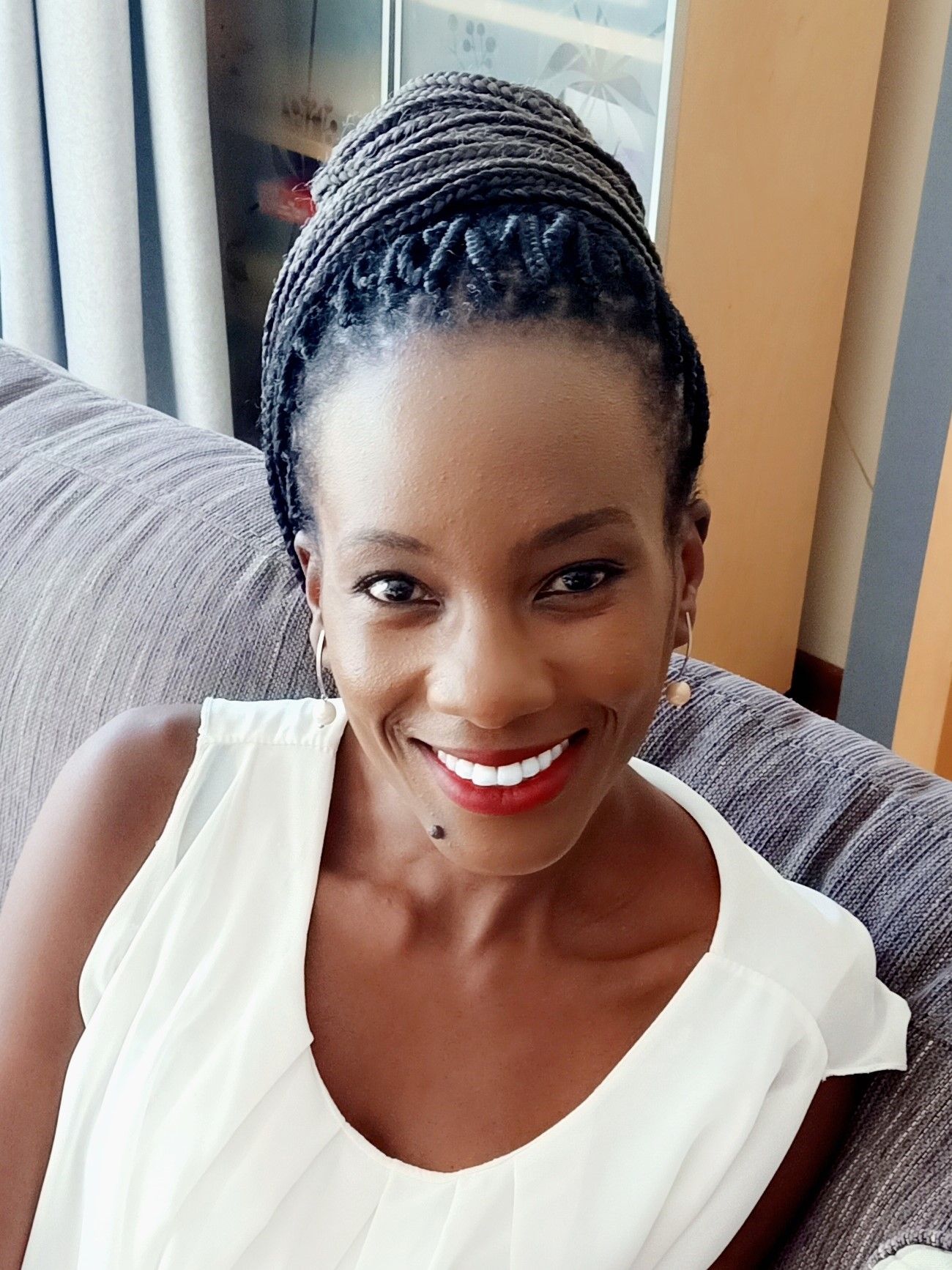
Before anything else, Sihle Jonas wants to make a disclaimer: she doesn’t think there’s much to say about her.
“I don’t usually talk about myself,” she says, “I didn’t even think my story was worthy of sharing.”

She worked hard in school, got her qualifications, found a job she cares about, and built her life on her terms. That’s it.
But as she begins to trace the road that brought her here, I can see that there is nothing simple about her journey. What Sihle reduces to “just working hard” is actually a woman overcoming a series of structural and personal obstacles that might have stopped many others. The fact that she kept going is not ordinary at all.
***
Sihle was born in a rural village in the Eastern Cape, where daily life revolved around nature. Water came from rivers, firewood from the forest and food from the land.
But even in that wide, open landscape, stability was fragile. She was born at the tail end of apartheid, when systems still shaped where people could live and work. In rural areas like hers, opportunities were scarce by design. Thousands of men across South Africa at the time left home to look for work in distant towns and cities.
Her father was one of those men.
Over time, the responsibility of raising four children and keeping the household afloat fell squarely on her mother’s shoulders.
As work options in the village dwindled, her mother eventually made the long journey to Cape Town. She picked fruit on farms from sunrise to sunset and washed dishes in restaurant kitchens late into the night. If there was a job that could bring in money, she took it.
“She worked so hard,” Sihle says. “But she didn’t have a choice. She had us.”
By “us”, she means herself and her three siblings.
For long periods, that meant Sihle couldn’t stay with her mother. Between the ages of four and eleven, she lived in four different relatives’ homes.
“It felt like I was alone a lot,” she says.
All around her, she watched the women in her life working constantly and still barely getting by.
“I admire my mum so much. Everything I am is because of her,” she says. “But I wanted more stability. I didn’t want to fight that hard just to eat.”
By the time she finally joined her mother in Cape Town, that resolve had already settled into her bones. Education, she believed, was the only way to break the cycle that had shaped the women before her.
***
She didn’t move into the postcard version of the city, with beaches and mountains. She moved to Khayelitsha, one of the largest townships in the country. It was noisy, crowded, and fast-moving. Compared to the open, quiet Eastern Cape she had come from, it was overwhelming. But Sihle’s family had to make it work.
“There was no backup plan,” she says.
She attended a local public school where classes were crowded, and resources were limited. Most students aimed for the few professions they knew: teaching, nursing or police work. Those who dared to dream big considered medicine, law or engineering.
Conservation wasn’t a word Sihle had ever heard.
***
By the time she finished high school, university didn’t feel like an obvious next step. Money was tight in their household, and there were younger siblings to think about.
So she didn’t apply.
For a while, she assumed that was the end of her education.
Then, she came across a government-funded bursary for a one-year college course in tourism. The tuition would be covered. The only thing she had to pay for was transport.
It felt manageable, so she enrolled.

The course focused on South Africa’s tourist attractions, including national parks, nature reserves, and conservation sites across the country. They went on field trips to places she had grown up seeing from a distance. For the first time, she visited Table Mountain National Park.
She saw penguins for the first time.
“I’d lived in Cape Town for years and had never been up there,” she says. “We always thought it was too expensive. I didn’t even know it was a national park. I didn’t know people actually worked there.”
Being outdoors, learning about ecosystems, and hearing that there were people whose actual jobs were to protect land and wildlife stirred something she hadn’t expected. It reminded her of the Eastern Cape, of growing up surrounded by open land and animals, only now there was language for it, and a career attached to it.
“I just thought, oh my goodness, this is a real job,” she says. “You can actually get paid to look after these beautiful spaces.”
By the end of that year, she made a decision she hadn’t planned on making: she would apply to university after all.
***
Getting accepted into university was one thing. Paying for it was another.
Registration alone cost thousands of rand. Her mother was still working long hours, mostly as a dishwasher by then, and whatever she earned went straight to rent, food and school fees for the younger children.
And there were no easy ways for Sihle to earn extra income.
“In America, for example, kids can work at places like McDonald’s while they’re still in school,” she explains. “Where I’m from, those jobs are for adults with families.”
In the end, she borrowed small amounts from relatives and ended up with just enough to register.
After registering, she applied for a National Student Financial Aid Scheme (NSFAS) loan to cover her studies.
Then, she had to figure out the daily logistics of getting to class.
She was still living in Khayelitsha, which is far from campus. Taxis were too expensive. Buses weren’t reliable. The cheapest option was the train, but even the train station wasn’t close. Still, she walked several kilometres just to get to it.
But the hardest part wasn’t the distance. It was the classroom itself.
Very quickly, she realised how unprepared she was compared to many of her classmates. The gap between township schools and suburban schools showed up everywhere.
“I had never even seen a microscope before,” she says. “I didn’t know how to use it."
It wasn’t just microscopes. It was the terminology and the pace of lectures. Other students knew what they were doing because they had lived it all before. She, on the other hand, was constantly catching up.
Eventually, the university placed her and several other Black students with similar educational histories in an extended foundation year to help them catch up academically.
“I wasn’t the brightest student,” she says with a laugh. “But I was a hard worker. I knew I had to work harder than everyone else. But even then, I was behind. It was very defeating.”
Quitting was not an option. What she did do was stop measuring herself against the other students and, instead, focus on passing.

And pass she did.
The bulk of the NSFAS loan she had applied for to pay for her studies was converted to a bursary once she passed most of her subjects with a distinction.
***
To graduate with a diploma in nature conservation, every student had to complete an in-service training year at an organisation. When the placement lists were released, the students' names were neatly typed against well-known institutions across the country.
Except two. Hers being one of them.
“Ours were handwritten at the bottom of the list,” she says.
It sounds like a small detail, but she still recalls the feeling of seeing it. It was as if even on paper, she hadn’t quite been expected.
Later, she learned that the only reason they had placements at all was that two staff members at the City of Cape Town had specifically asked to take on Black women interns.
By then, she had already started noticing how conservation spaces looked and who they were built for. During her studies, most of the professionals she encountered were white and often male. When she walked into offices or meetings, she could count the number of Black faces in seconds.
“You feel like you don’t belong, like you’re visiting someone else’s space,” she says.
Even practical things exposed the gap. Many placements required interns to drive field vehicles. Most of her classmates already had driver’s licenses. She didn’t. Lessons and tests cost money that her family couldn’t spare. It was another disadvantage that followed her into professional life.
Still, once the internship began, she focused on the work itself.
It was practical and close to the land. It reminded her of the Eastern Cape, where she had grown up. She loved it.
“That part always felt natural to me,” she says.
What didn’t feel natural were the rooms where decisions were made.
In meetings, she noticed older white men leading discussions. Policies shaped by people who had never grown up in places like Khayelitsha or the villages she came from. As a young Black woman, still fresh out of university and already aware of the gaps in her education, she often felt like she had to work ten times as hard just to be taken seriously.
“There’s this pressure,” she explains. “You feel like you can’t just be average. You have to be excellent. You have to prove you deserve to be there.”
During that year, each intern had to design and present a research proposal to senior management. It meant standing before a room full of experienced professionals and defending your ideas. She remembers how intimidating it felt walking into that room.
“I looked around and thought, what am I doing here?” she says.
But she had spent her whole life pushing through discomfort. So she prepared the only way she knew how, by working harder than anyone else.
“I just told myself, do your best,” she says. “That’s all you can control.”
When the results were announced, her proposal was chosen as the best.
She needed a moment to process it.
She later learned that she was the first Black person and the first woman to win that competition.
A few Black colleagues and staff members gathered around her and congratulated her because it was something they all shared.
“It felt like a win for all of us,” she says.
For the first time, she felt capable.
***
After that came a position through an Expanded Public Works Programme, a government initiative designed to create temporary jobs for unemployed youth. It didn’t pay much, but it kept her inside the system.
“I just kept saying yes,” she says. “If there was an opportunity, even a small one, I took it.”

Eventually, a permanent position opened up. When she got the call, she remembers feeling something close to disbelief. A steady salary. Benefits.
“For me, that was huge,” she says. “It was security.”
From there, her responsibilities grew. She became a reserve supervisor, then a reserve manager, overseeing conservation areas on the outskirts of the city near Atlantis.
For years, she poured herself into her work. But over time, something began to bother her. Not the work itself, but who the work seemed to serve.
Day after day, she managed fenced-off, monitored spaces. Beautiful places, rich with biodiversity, and largely empty of the people who lived closest to them. Children who grew up just a few kilometres away had never stepped inside. Entrance fees and transport costs kept them out.
Meanwhile, tourists and wealthier visitors drove in easily.
“It didn’t sit right with me,” she says. “I kept thinking, who are we protecting this for if our own people can’t even access it?”
She thought about her own childhood, growing up surrounded by nature in the Eastern Cape, but never knowing it could be a career, then moving to Khayelitsha and barely accessing natural spaces at all. She remembered how long it had taken her just to visit Table Mountain National Park for the first time.
Now she was on the other side of the fence, managing those very spaces. And she began to question the system she had worked so hard to enter.
“A lot of conservation is what they call fortress conservation,” she explains. “We say we’re protecting nature, but really, we’re keeping people out.”
She understands the need to protect fragile ecosystems. But she also understands that people protect what they feel connected to. If children never set foot in these places, how could they care about them? If conservation only served the wealthy, how could it ever feel like justice?
In her current role as an ecological coordinator, supporting biodiversity management across the city, she carries those questions with her. Her focus is shifting toward advocating for programs that bring school children into reserves and provide fee-free access for low-income communities.
“I don’t want conservation to be something only certain people benefit from,” she says. “Nature belongs to everyone.”
***
Today, Sihle lives in Gordon’s Bay, a small coastal town tucked between the mountains and the sea. On most mornings, the loudest sound comes from the waves breaking against the shore. After years in Khayelitsha, where silence was rare, the quiet feels precious.
“I like the calm,” she says.
She lives alone with her three dogs. Most weekends, she drives back to Khayelitsha to see her family.
For a long time, work filled most of her time. Work and striving. Studying further. Collecting qualifications. An undergraduate degree, then an honours, then postgraduate studies. Each one was another layer of protection to ensure she would never slip back. Looking back, she realises how much of it was driven by fear.
“I think I’ve always felt like I have to keep going,” she says. “Like if I stop, everything falls apart.”
Then came the WE Africa journey.
At first, she didn’t think she belonged there either.
She didn’t have an NGO. She wasn’t a public figure. She wasn’t saving the world in some visible way.

“I remember thinking, everyone else has these big stories. I just have a job.”
But the program asked something different of her. It wasn’t about achievements. It was about looking inward.
And that, she says, caught her off guard.
Through coaching and reflection, old memories resurfaced.
“I had convinced myself I liked being alone,” she says. “Because then, no one can hurt you.”
Working through those feelings wasn’t easy. There were moments she wanted to quit the program entirely.
But she stayed.
She began reconnecting with friends she had drifted away from. She started questioning some of the beliefs she had carried about relationships, about worthiness, about what kind of life she was allowed to want.
And it changed her.
“I’m softer now,” she says. “With myself.”
It’s a small sentence, but it carries a lot of weight. Because for most of her life, softness wasn’t an option. Survival required toughness, discipline and constant motion.
Now, for the first time, she is learning that strength can look different, too.
She thinks about the girl she used to be and the woman she is becoming. She still insists there’s nothing extraordinary about her journey.
“I just worked hard,” she says.
But the truth is written in her story.
She may not call it worth telling.
But it is.
***
This interview is part of a series profiling the stories of the 2025 WE Africa leadership programme fellows. African women in the environmental conservation sector who are showing up with a strong back, a soft front, and a wild heart.
***
About Sihle Jonas
Sihle Jonas is a conservationist with over 13 years of experience in urban conservation, working within the government sector in the City of Cape Town. Her passion and focus are on biodiversity protection, rehabilitation and community conservation. She collaborates with different communities across the city on various biodiversity projects, sustainable use of natural resources and community outreach.
Sihle has advocated for the woodcutter's program in protected areas, which provides communities with the opportunity to harvest wood for subsistence use. She currently oversees the city's spring flower no-mow program and the biodiversity garden and rehabilitation program in public open spaces. These initiatives are driven by collaborations and partnerships with various communities across the city.
Sihle has served as a reserve manager at one of Cape Town's most notable nature reserves. She currently serves as the ecological coordinator for the Recreation and Parks department, which is responsible for the management of conservation areas and the facilitation of stakeholder engagement with neighbouring communities and pertinent NGOs. This has enabled her to work for and with a diverse range of communities and stakeholders to address conservation matters and community needs. She is currently working on projects that enable various communities an opportunity to harvest indigenous plant seeds to grow for the rehabilitation of parks and replanting of medicinal plants on public open spaces to enable better and sustainable use of open spaces.
She is also an active member of the city’s Ecological Management Committee, the City Nature Challenge Committee, as well as the member of the committee on water quality in wetlands, waterways, and the coastal environment of the city of Cape Town.