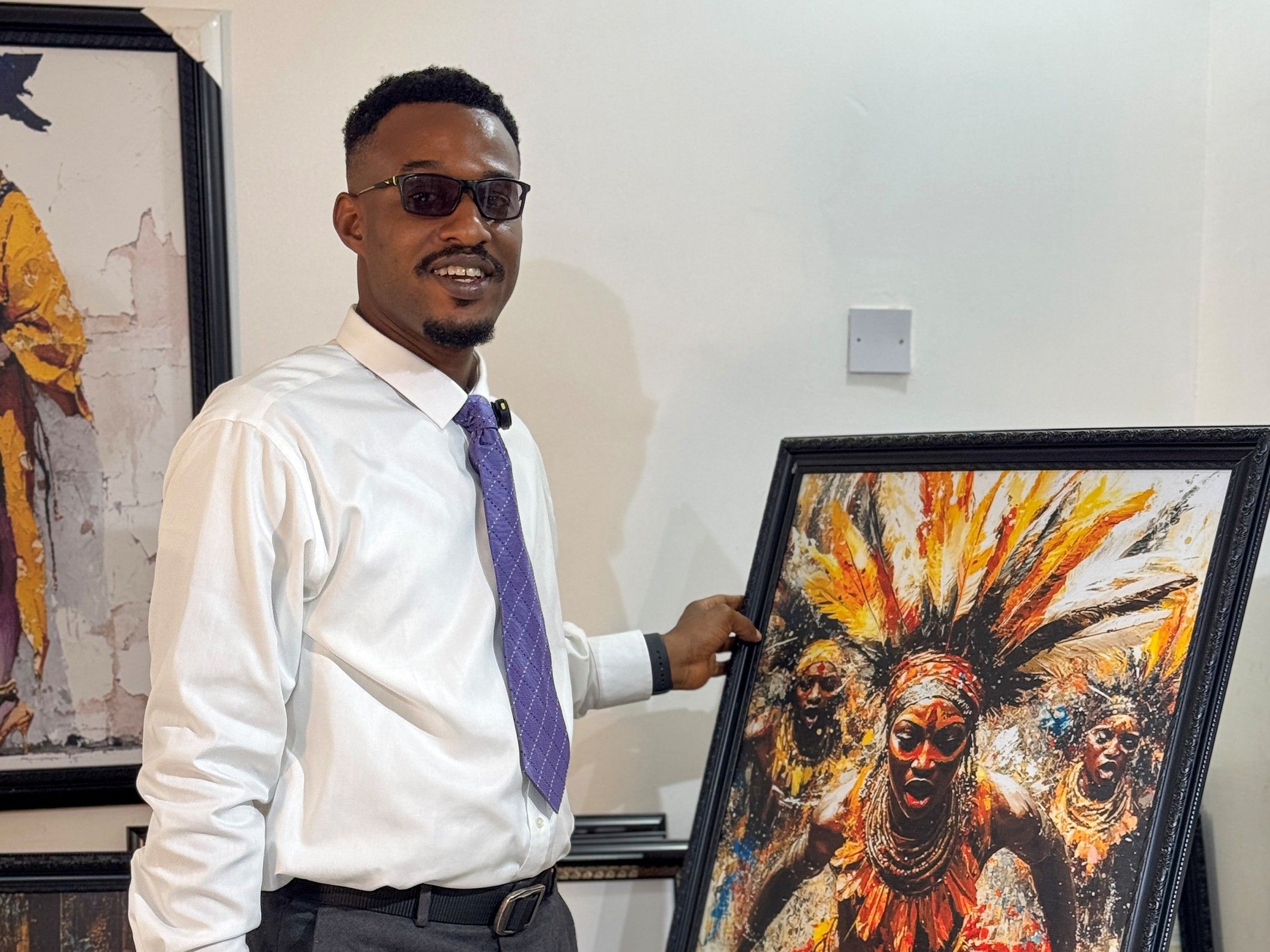
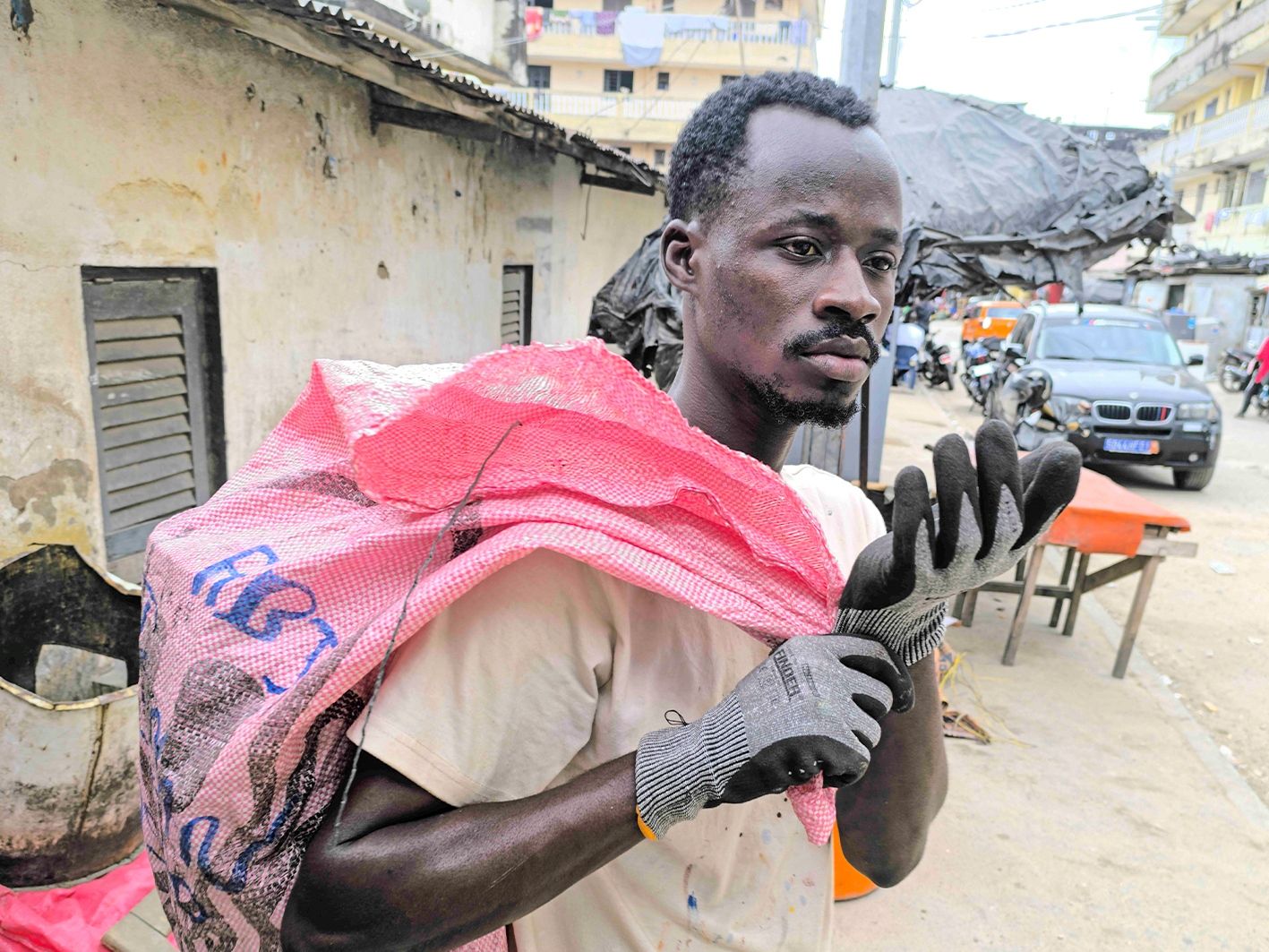

Across Africa, artists are developing innovative ways to tell stories using everyday materials. Ténéna Jules Tuo, an Ivorian artist, uses discarded plastic mats as canvases to paint portraits of people living on the streets in Abidjan, challenging traditional notions of what art may be made out of and whose lives deserve to be represented.

By Masseni Yakubu, bird story agency
For visual arts student Kouassi Yao Fulgence, the plastic mats in Ténéna Jules Tuo’s work are familiar. He once slept on mats himself. Seeing them transformed into art has opened up possibilities he had never imagined.
“For me, this is something new because I used to sleep on a mat myself. Today, I am discovering that he uses them to create works of art. It is truly extraordinary.”
Tuo, a 25-year-old Ivorian visual artist, creates artworks from discarded plastic mats that reflect homeless people's lives. By using a material linked with common domestic life, he brings attention to people whose stories are sometimes disregarded in urban environments.
His work addresses two issues: plastic waste and the treatment of homeless people. Instead of utilising traditional canvases, he gathers old mats, cleans them, and prepares them for painting.
Tuo was chosen as one of ten artists to attend the second edition of Toiles et Talents in Abidjan in February 2026. His work is part of Côte d'Ivoire's contemporary art movement, where artists are experimenting with repurposed materials and new approaches to portray societal issues.
For Tuo, however, the choice of material is also personal. Mats were part of his childhood and remain familiar objects in many households, particularly those with modest means. Families use them for sitting, sleeping and other daily activities, making them part of shared domestic experience.

“The choice of the mat as a medium for artistic creation is not without reason, because, to me, the mat is a material full of value and meaning. It has always been part of our families’ lives, especially those of more modest means. I have also developed this connection with the mat because we were born on mats. We sat on them for certain activities. The mat remains a part of our collective memory. That is what truly motivates me to use it to portray the daily lives of people living on the streets.”
The process begins with collecting used mats, sometimes from demolition sites or dumpsites. Tuo washes and disinfects them using washing powder and bleach before allowing them to dry. Once prepared, the mats become surfaces for his artwork.
Through this process, a material that might otherwise be discarded becomes part of a work that asks viewers to consider both waste and the people represented in the paintings.
“The aim of my work is to show the world that a homeless person is also a human being with value and dignity, just like everyone else in the community. It is therefore about changing people’s perceptions of homeless people, but also of used materials that are polluting our environment.”
Tuo’s work also reflects the difficulties young artists can face as they try to establish themselves professionally. During his studies at the National Institute of Arts and Cultural Action (INSAAC), he encountered challenges but continued working, encouraged by fellow students who supported his approach.
He acknowledges that he has not yet achieved all his goals. Still, he wants other young painters to understand that limited resources need not prevent them from beginning their work.
“I therefore encourage young painters not to wait until they have all the necessary materials before getting to work. They should not wait for galleries to approach them or for exhibition opportunities to arise either. They should start with the resources available to them, work and persevere. Opportunities will eventually come.”
For Tuo, working with discarded mats is not only a practical response to the cost or availability of art materials. It allows him to use an object with personal and social significance to explore the lives of people who are frequently ignored.
Dr Momine Sadia Roland, a lecturer and researcher at INSAAC, says the artist’s approach changes how the material is understood.
“Indeed, used plastic mats, often associated with economic hardship, everyday life and domestic use, are generally perceived as ordinary objects with little market value, or even as waste once they become unusable. However, the artist’s appropriation of these materials changes their status: what was previously considered a used or insignificant object becomes a genuine material carrying meaning, collective memory and aesthetic value.”
The mats retain traces of their original purpose through their textures, colours and patterns. In Tuo’s work, these characteristics become part of the artistic composition, while the subjects of his paintings bring attention to experiences of poverty and exclusion.
“Through the interplay of textures, colours, patterns, shapes, compositions and thematic choices, painter Tuo Jules reveals the artistic qualities of these preferred materials and gives them a new existence within the field of contemporary creation,” added Roland.
Roland’s assessment places Tuo’s work at the intersection of contemporary art, environmental concerns and social representation. The materials are not simply substitutes for conventional canvases; their associations with household life and economic hardship contribute to the meaning of the finished works.
Tuo’s approach also offers a way to consider how artists can work with materials available in their surroundings. By collecting and preparing discarded mats, he turns something commonly treated as waste into a medium through which he can address questions of dignity and social visibility.

For Fulgence, the significance of this approach begins with an object he already knows. Having slept on mats himself, he recognises their place in everyday life. Seeing Tuo use them to portray people living on the streets has shown him another way the material can be used.
The mat is no longer only an object associated with sleeping or domestic activities. In Tuo’s work, it becomes a surface for telling stories about people whose lives often receive little attention, while giving discarded material a new purpose.
bird story agency