
It was her teachers who noticed it first.
Something was off with her.
While other kids participated in class, she sat still, her thoughts far away, somewhere…lonely.
Her surroundings blurred out, such that the kids laughing and shouting in class as they learned became distant voices and noises.
“Souad?” her teacher called.
“Are you okay?”
That drew her back into the present, but still, she just gazed, neither saying a thing nor participating.
She was only five years old.
Her teachers must have discussed it in the staff room, each sharing what they had observed about the little girl. It was then that they decided to phone her father.
Hello…this is…yes, from the school…her teacher…so we’ve been noticing…strange behaviour…yes, she is…removed…doesn’t play with others…doesn’t participate…mentally absent…we believe something is wrong with her.
Her dad, a single parent, gave it some time to see if things changed; kids can be gloomy and inactive sometimes. But when the complaints and concerns of the teachers kept coming day after day, he decided it was time to seek professional help.
***
“How are you feeling?”
Souad looked around, taking in her environment. She was in a small, well-organised room with comfortable furniture somewhere in Jeddah, Saudi Arabia. The man speaking to her had a soothing voice, the way adults lower their tone to a child’s level. The room featured soft lighting and neutral, calming colours. Her dad sat close by as the man asked Souad some questions.
“What’s happening at home?” he wanted to know. “How about at school?”
Souad doesn’t recall what answers she gave; most of the memories faded as she grew up into a teenager and then an adult. But she remembers the psychiatrist pulling her dad aside, taking him outside the room.
She later learnt about the brief conversation the doctor had with her dad.
“Your daughter is undergoing depression,” he’d said to her dad, “and I believe it is because of the divorce.”
***

Just a little girl seeking motherly love
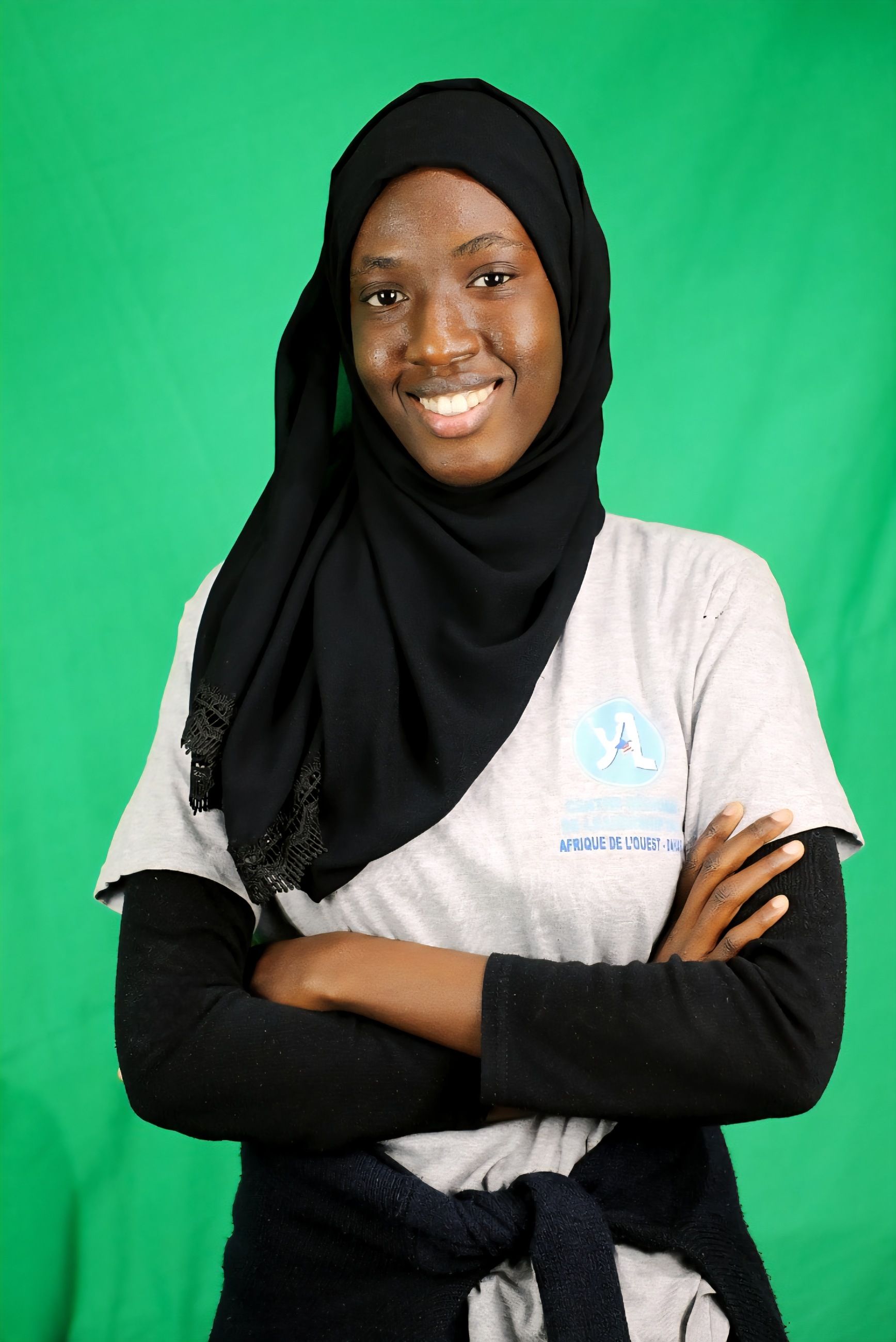
Souad Moussa Soumana is Nigerien; her parents were from Niger, but she was born and raised in Jeddah, Saudi Arabia, in the late nineties.
The 2025 Mandela Washington Fellow and founder of Mirath Déco, an interior decor company using culturally-rooted art and innovation to reimagine Niger and empower women, grew up with her 3 siblings under the parenting of their single dad.
“My parents divorced when I was five years old,” Souad told me during an online interview she gave me in January 2026.
“I don’t know what really happened, just that, unfortunately, things never worked out for them.”
Before the divorce, Souad had been close to her mother. But then one day, her mother left, and the explanations about a divorce and what that was or meant were too heavy on a five-year-old who knew just one thing: “I miss my mother and the way my family used to be.”
“I recall having a happy childhood, but then, because of the gap my mother left, I was seeking motherly love in other women,” she said.
“I attended a French Senegalese school in Jeddah, where most of my teachers were women. I started seeking in them that motherly warmth I lacked.”
At school, her teachers started noticing Souad was removed, and when they called her dad, he took her to a psychiatrist. She was diagnosed with depression at the age of five, but doesn’t recall any serious intervention or what the doctor recommended, only that her dad kept doing his best to take care of her. He created time off his busy schedule to discuss with Souad her day at school and how she was doing.
Souad’s story got me wondering what depression in children looks like. Eager to fill this knowledge gap, I surfed through an Australian parenting website and learnt that depression in children is a “mental health condition that affects children’s thinking, mood and behaviour”. The child may “have less energy than they usually have”, be uninterested in “playing or doing things they usually enjoy”, or not take part in “school activities”.

Souad admitted that, a couple of times, she “looked at other kids interact with their mothers” and wished hers were around.
“I would behave like someone else’s child, cling to someone’s mother like they were mine,” she narrated. “Looking back, I realise I did this unconsciously. All my life until I became a twenty-two-year-old adult, I sought motherly love elsewhere.”
One of the instances Souad recalls was when she had a friend she visited a lot, and admired how the friend had a great relationship with her mum. Souad was about fifteen years old.
“I envied her,” she told me. “I was just a little girl, and whenever I got an opportunity, I used to cuddle with her mother.
“One day, my friend’s mother told me, ‘You always do that when you come. I am not your mother.’ While it was an innocent comment and I know she never meant to hurt me, I got hurt. I’d not realised that that was how I had behaved with her.”
While her mother used to travel from Niger to visit Souad and her siblings from time to time, the moments they shared were brief. “There wasn’t enough time to bond; I only got to know her deeper later in life when I relocated to Niger,” Souad told me.
I want to be a soldier so I can defend Niger
Thanks to the attention and love from her dad, and the keen interest one of her teachers took in her well-being and performance in school to ensure she wasn’t left behind, Souad opened up. By the time she got to high school, she’d sloughed depression off her life.
She became a happy and outgoing child.
At home, her dad ensured that his children remained rooted to their homeland, Niger.
“We spoke Senegalese, French, English and Arabic at school. But back at home, dad ensured we spoke our native language, Zarma.”
Zarma is an ethnic group in Niger, but also the name of their language.
“He kept us culturally informed about home. From life in Niger to stories about his childhood with his siblings and about his village—dad did his best.”
The stories about Niger paid off; they instilled in Souad a deep longing for her home in Africa. She understood where she came from and developed a passion and desire to one day go back home and help defend and build her country.
But the desire was strange, not what her dad had expected.
“Dad, I want to become a soldier,” Souad told her father one day. She was in high school, attending Ecole Sénégalaise International de Djeddah.
“A soldier? Why would you want to become a soldier?”
“So I can go to Niger and defend my country. Please buy me soldier clothes.”
Looking back, Souad thinks her dad must have been shocked, and he only agreed to this dream because he must have thought, ‘she is young, she’ll eventually change her mind as she grows up.’
Souad started working out and watching a lot of videos on how soldiers behaved.
A year later, however, her dream changed.
“I now wanted to become a psychologist,” she told me. I asked her what inspired her change of mind.
“There was a girl at school who lied a lot. It was just her nature. Her brain intrigued me, and I wanted to understand her inspiration to fabricate lies. I developed an interest in the human brain and its workings.”
The events leader, humanitarian and aspiring entrepreneur
It was in high school that Souad also developed an interest in leadership. A now outgoing teenager, other students voted her the minister for events. Her duties revolved around organising school events, including parties.
“The party girl in me enjoyed herself through this role,” Souad laughed. “You see, I’d been raised by a strict dad who was anxious as he raised us as a single parent, and so he put rules in place; we wouldn’t go out a lot. And when we did, there were strict hours and a time we had to be back home. I found freedom in high school and through my new role as minister for events, took advantage to do the partying I couldn’t when at home.”

While Souad wanted to pursue psychology after high school, her mother had other thoughts. During one of her visits from Niger, she discouraged Souad from pursuing psychology, encouraging her to select other courses.
“The foundation of my passion for psychology was also not solid,” Souad narrated. “After tenth grade, I had picked an obsession for architecture. I found this field fascinating and dreamt of designing and building my own house. I kept a little notebook where I wrote down stuff to do with this dream.”
Although architecture had been warming up in Souad’s heart, she never got the opportunity to travel to Senegal, as she’d hoped, to study it. She, however, took short online courses to learn more about this field.
Souad joined the African Development University in Niger in 2020 to pursue project management.
Since this university was a business school, her classwork included lessons on business plans, marketing, and branding.
“I started thinking of an interior design company that also handmakes furniture,” she narrated.
“I was inspired by the shocking discovery that back then, no business dealt in handmade furniture; we imported from Nigeria and Senegal, yet we had every resource needed to make our own.”
As Souad kept turning this idea over in her mind during her business lessons in her project management course, she saw another opportunity to lead. She applied for the position of events and sports minister, citing her high school experience in leadership.
The selection committee reviewed her profile and picked her to be the university’s new vice minister for events and sports.
Souad also expanded her leadership into the university humanitarian club, taking the helm as their new secretary.
“I was from a privileged background, and so I’d always yearned for ways to give back to others. I found that opportunity in the humanitarian club. I helped the club plan events to raise money, and then we organised giveaways of foodstuffs and clothes to orphanages and hospitals. I also volunteered twice with programs that taught women practical skills to help them advance in their professional careers. There were mother figures who stood by me growing up, and I had vowed to involve myself in activities that helped other women whenever I got the chance. My dad had also brought me up in a good environment where I got an education, something most Nigerien women didn’t get. I wanted to give back to my society by helping them.”
Since moving to Niger and joining the university, Souad had lived with her mother. It allowed her to know her mother deeper and bond more, something she had missed growing up.
But a new challenge reared its head. One, her dad relocated to Niger from Saudi Arabia, and it now meant that her divorced parents took turns living with their daughter. Souad had to move from time to time from her mother’s house to her father’s place. Two, her school performance began to plummet because she had a lot on her plate: her business plans, academic studies, and her leadership roles.
“Sometimes, when it was time to move from one of my parent’s house to the other, it stirred problems because neither wanted me to leave. With all that I had on my plate, it took a toll on me trying to balance my passion, the domestic situation, and school. My grades suffered, and I recall mum warning me that if I kept failing in school due to all the extracurricular activities I took on, she’d transfer me from the university. It was stressful. At some point, I took medication for the stress.”
The rise of the businesswoman
In her first year, Souad started selling clothes.
“My mother used to buy clothes from Saudi Arabia and sell them in Niger. I asked her for some and started selling at the university,” she recalled.
“In my second year, I started selling sandwiches with my friend. We’d spotted a gap because the university did not have a cafeteria at the time. I’d go to the market, buy ingredients, come back and prepare the sandwiches, market and sell, all the while balancing with my studies.”
The workload involved was too much. Souad quit the sandwich business. Her next business also failed.
“I asked my dad for capital to start a yoghurt-making business. My friend was still my business partner. Dad gave me the capital, but we failed because we invested a lot of it in yoghurt-making and little in other parts of the business, like marketing. Looking back, we had not taken time to scrutinise the idea and come up with winning strategies.”
‘Souad of all trades’ also tried her hand at selling chocolate at the end of Ramadhan so families could have a box of chocolate on their dinner tables, but this business also went pear-shaped.
Souad was unrelenting, though. She kept rapping on entrepreneurship’s door. During fairs at the university, she set up booths and sold shoes and ladies’ accessories.

Entrepreneurship needs a stubborn spirit that keeps trying, and Souad sure had one.
Participating in YALI and the birth of Mirath Déco
In 2023, Souad participated in the Young African Leaders Initiative (YALI) in Dakar, and it was here that she got clarity for her company, which had remained an idea for some time.
She named her company Mirath Déco and decided to combine interior design, handmade furniture, and Nigerien culture.
Mirath is Arabic for ‘legacy’, and for Souad, it made sense because her company would build legacy, celebrating the richness of Nigerien culture through interior design and handmade furniture. And Mirath, being Arabic, reminded her of her birthplace—Saudi Arabia.
“YALI helped my project evolve into a company that renovates homes, designing interiors that, through mood and colours, lighting and furniture, reflect Niger and our culture. Mirath Déco became an idea for an events decoration and interior design company dealing with handmade furniture.”
But Souad needed to start somewhere and start small. In May 2025, she started hosting culturally-rooted workshops to train women how to make vases and ceramics. Mirath Déco partnered with an expert woman who worked with clay to design cultural vases and ceramics.
Together, they trained other women. The workshops created a space to raise awareness about the importance of elevating the Nigerien culture, helped the women discover their artistic spirits, and empowered them economically.
Souad’s plan in the near future is to scale up to handmade furniture and interior design.
Participating in the Mandela Washington Fellowship
Her idea for Mirath Déco won a spot for the prestigious Mandela Washington Fellowship for Young African Leaders.

In June and July 2025, Souad attended the fellowship’s leadership in business track at the University of Texas at Austin, where she worked with other fellows under the tutelage of Professor Rodney Northern of the university’s McCombs School of Business.
“The fellowship boosted my confidence to launch,” Souad told me.
“I had been stuck in the planning phase for five years. Attending the fellowship and being in a space where I saw other Africans doing amazing work with their businesses using little resources, made me realise I didn’t have an excuse. I started working on beating my fears and stopping holding myself back.”
The Mandela Washington Fellowship had a double impact on Souad.
“Firstly, it brought to the surface all the fears I’d been pushing down,” she said, “and secondly, it pushed me to confront them. It also helped me develop professionally, gain new perspectives, and build a network of African entrepreneurs I can reach out to, brainstorm and collaborate on projects with.”
Once a five-year-old girl who was diagnosed with depression, Souad is now a business and cultural leader, shifting narratives in Niger and empowering other women.
If Souad looked into the mirror and the young girl she once was gazed back, that young girl’s eyes would widen with pride for her older version. Like a butterfly, Souad has gone through her growth stages and developed wings. It’s amazing to see Mirath Déco soar high, carrying the beauty and culture of Niger and the pride of Africa.
You can connect with Souad Moussa Soumana via LinkedIn.
***
This story is part of a series Lesalon Kasaine is writing, of the stories of select 2025 Mandela Washington Fellows. Read more about the Mandela Washington Fellowship for Young African Leaders, a program run by the US Department of State. Lesalon was himself an MWF 2025 Fellow. These stories are powered/supported by Africa No Filter through the Kekere Storytellers Grant.