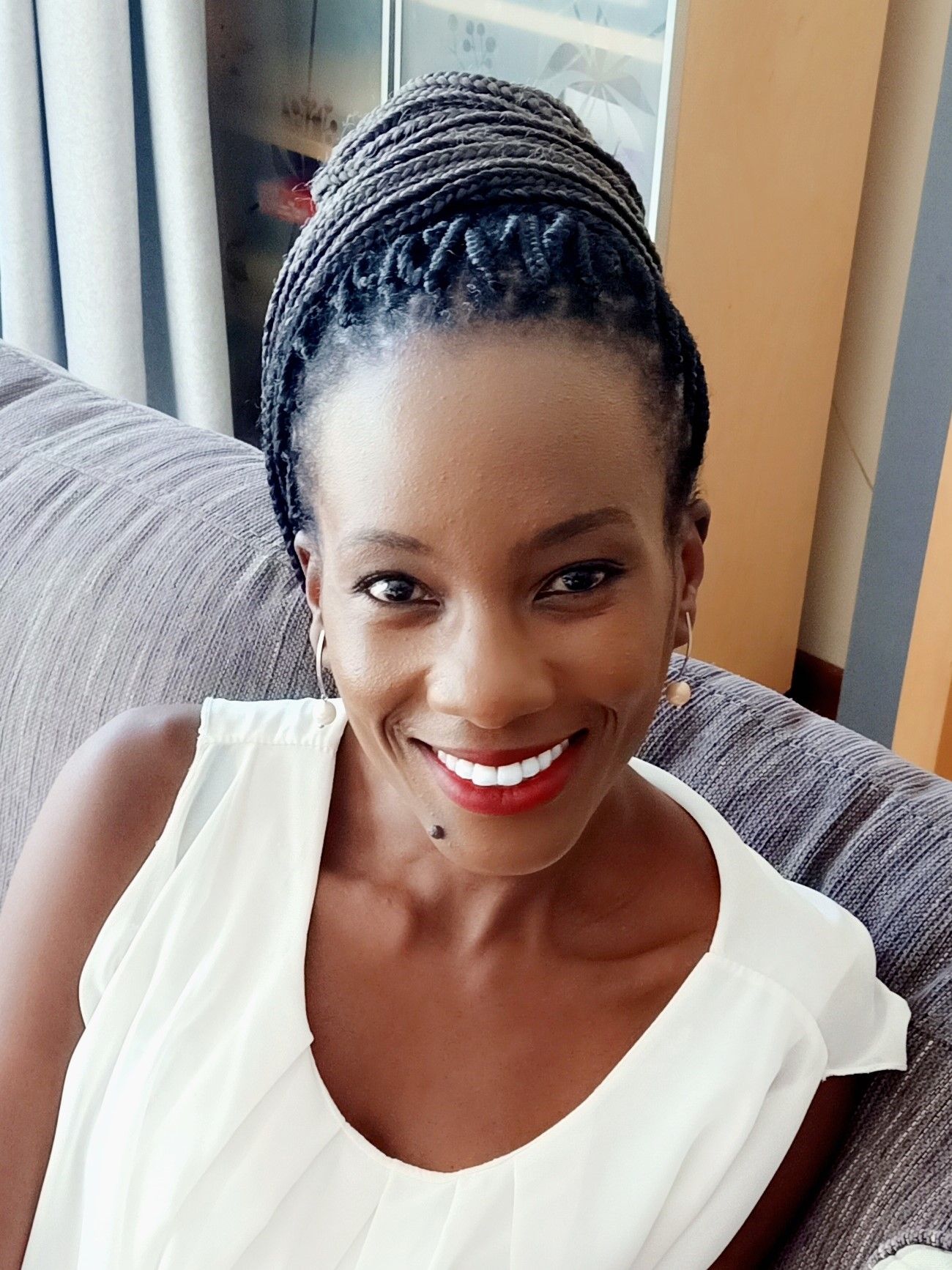
Etosha National Park has been one of Namibia’s key conservation areas for over a hundred years.
It is home to the largest population of black rhinos in the world, a critically endangered species under constant threat from poaching. It is enclosed by an 824-kilometre fence and receives thousands of visitors each year. Over 500 people work in the park, including rangers, security staff, researchers, technical crews and environmental educators.
It is a vast, complex system that requires constant oversight.
And within it, Naambo Iipinge holds one of its most senior roles.
She is the park’s Deputy Director.

Her responsibility is to ensure that its many moving parts function together. Her role covers research and monitoring, wildlife protection, park management, tourism, infrastructure, human resources, and more.
But the weight of her position is not only in what she does. It is in what it represents.
Since its establishment in 1907, Etosha National Park has been managed entirely by men.
Naambo is the first woman to ever hold the Deputy Director position.
When news of her appointment spread, there was the inevitable push-and-pull.
“She won’t manage,” they said. “She won’t survive.”
Almost three years later, she is still in the role.
Most of the time, she is the only woman in the room. Some people question her presence and challenge her leadership. When the park receives support, some will ask, "Is this because of Naambo?"
“It’s not an easy job,” she says. “It comes with people undermining you just because you are a woman.”
But undermining a woman who knows her worth is a big mistake.
***
Naambo is, in her own words, “just a girl from a village”.
She grew up in Onaniki, a village in Namibia's north-central region, as the fifth of nine children. With seven brothers and one much older sister, she spent most of her days with her brothers.
“But there was never a day when I felt small,” she says.
Her father made sure of that.
He taught her to never doubt herself.
“Look people in the eye,” he would tell her, “and never lose your confidence.”
At the time, she didn’t realise what his words were preparing her for. As she got older, she saw that the world outside her home would not always give her the same sense of belonging.
It would be a world where she would have to claim her space, again and again.
In that world, the confidence her father instilled in her became his greatest gift.
***
Caring for the environment was part of everyday life.
“I didn’t even know that conservation was a career,” she says. “I thought it was just what people do every day.”
Things might have stayed that way if not for her cousin, Mwadhina, who worked in the environmental space. Every so often, she visited her home, which was in Naambo’s neighbourhood. And when she did, she always arrived in her uniform.
The way this woman carried herself really stood out, and, for the first time, Naambo saw something she intimately knew in a completely new way.
“I was like, wow… so this is actually a career,” she says.
Naambo never forgot that image of her cousin in uniform, and as she grew older, something began to bother her. Almost everyone working in conservation was a man.
“And I said, ' Why can't I join Mwadhina?” she says. “Let me increase the number of women in this career.”
By the time she finished high school, she knew that this was exactly what she wanted to do. But when she went to enrol in a nature conservation course at university, it was already full.
She settled for agriculture, and even though she passed her classes, she decided to leave after her first year. The following year, she came back to sign up for conservation, and this time, there was a spot for her.
“I said I would rather start over and do something that I had always wanted to do,” she says.
***
Naambo found that studying conservation was harder than she had thought.
Many days were spent outdoors, moving through landscapes that were both beautiful and unforgiving. At night, the students slept on a thin tarpaulin laid out on the ground. Each student would unroll a sleeping bag and lie down next to the others.
When the year began, there were around 30 students, but only a handful were women.
As the months went by, the women in the course started to leave, one after another. Some found the conditions too tough. Others struggled with a lack of privacy, the physical demands, or being away from home comforts.
"By the end, there were only two of us left," Naambo says. "It was not the kind of environment for people who love heels or makeup."
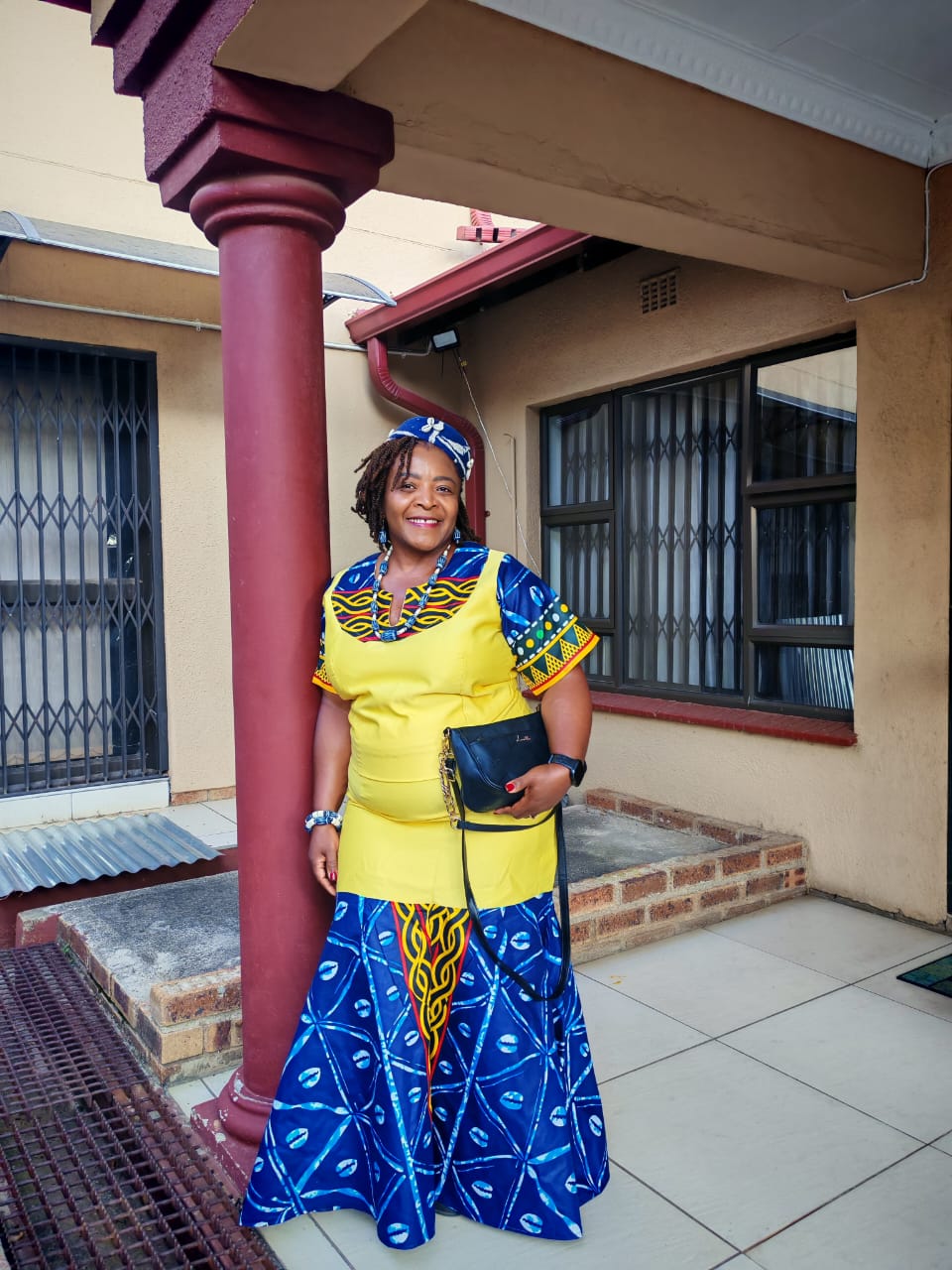
We’re speaking on Zoom, and today Naambo is wearing a bright red dress. Her nails are a matching colour. Right now, nothing about her appearance hints at the life she’s just described.
I point out the contrast.
She smiles.
Then, she shifts in her chair and lifts her leg so it’s visible on camera.
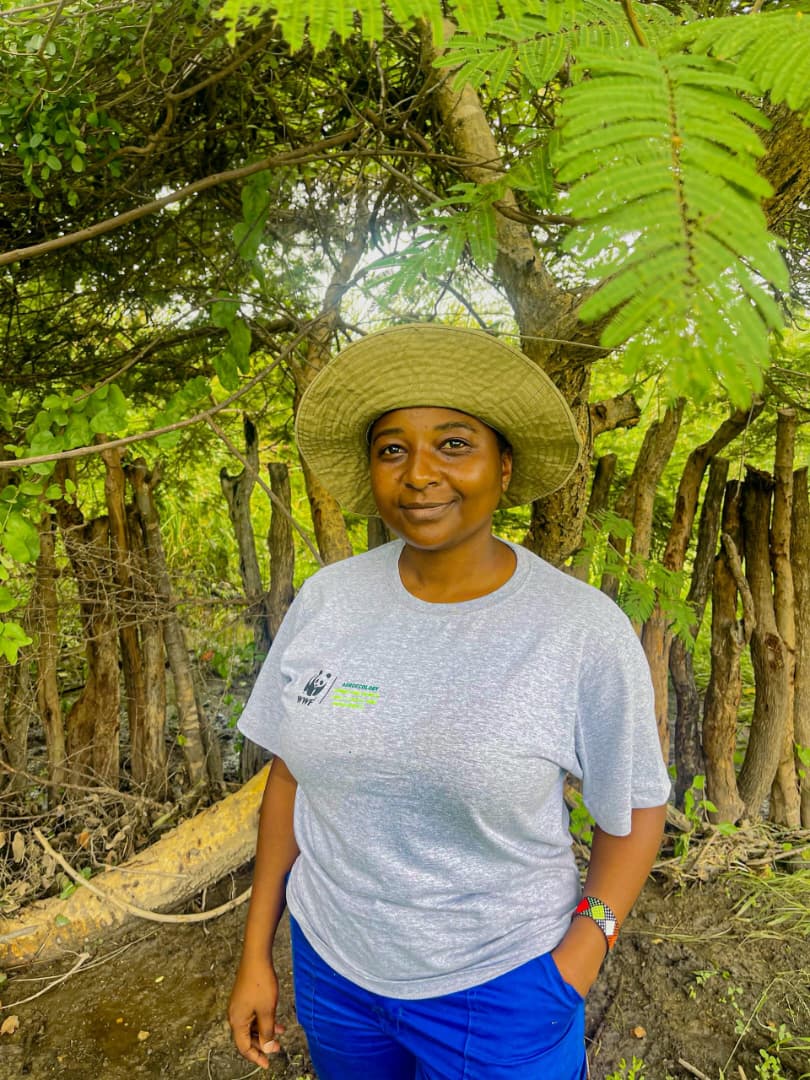
"I’m also wearing heels," she laughs. "But don’t let this fool you. I was a Girl Guide when I was growing up, and one of the things we were taught was to always be prepared," she says. "Even now, I am prepared. My boots and my uniform are in the car. If I need to, I can take off this outfit, run and go."
She explains that working in conservation means you must always be ready to adapt. When she doesn’t need her boots and uniform, she’s happy to go back to wearing pretty dresses.

"I don’t want to be a boy. I will remain my dad’s princess," she says.
***
Just two months after graduating, she was offered a job as a research technician at Gobabeb, a research institute in the Namib Desert.
In many ways, it was an ideal start to her career.
Gobabeb sits deep in the desert and studies the fragile ecosystems that survive in one of the world’s harshest places.
“I loved my job,” she says. “But there were issues of discrimination and all that.”
She does not go into the details, but it is clear she was not willing to accept it.
When a job became available at the Ministry of Environment, Forestry and Tourism, she resigned and accepted the new position.
She moved to northeast Namibia, where she worked closely with communities to understand how people and the land rely on each other and how both can benefit from embracing Community-Based Natural Resources Management.
Over the years, she took on various roles, coordinating programmes that managed natural resources across borders, among them the largest transboundary conservation area in the world, the Kavango Zambezi Transfrontier Conservation Area (KAZA TFCA).
21 years later, she is the first and only woman to serve as Deputy Director in the Directorate of Wildlife and National Parks.
Naambo has learned that the work is demanding not only in the field, but also in ways that are harder to see.
Etosha is very isolated. For many people who live and work there, life is limited to the park’s boundaries. There is one school, one health clinic, and not many places to go or people to see for support.
Over time, it takes its toll.
“Every month, I have staff crying in my office,” she says. “They say, ‘I can’t do this. I need to leave.’”
Many of them are separated from their families. Some have young children they can’t live with. Others are raising families in a place with few activities. In these situations, Naambo becomes the person they turn to.
“I have to be a mother, a psychologist,” she says.
This responsibility is rarely recognised.
“People are so keen to put funds aside for fauna and flora,” she says. “But no one prioritises those who take care of the wildlife.”
A case in point is last year, when a fire swept through Etosha, destroying more than half the park. People called to ask about the animals and if they were in danger. But behind those questions were men and women on the ground, fighting the fire, taking risks, and pushing themselves to the brink of exhaustion.
“I had staff who almost burned, but people never even asked how we were doing,” she says.
And then, there have been incidents where poachers have been killed.
“You have to deal with seeing dead bodies. Even if they are poachers. The psychological burden of these experiences is something you carry with you. And nobody cares how you deal with it,” she says.
It all becomes too much, and many frontline workers end up leaving.
Having witnessed this state of affairs for more than two decades, Naambo now believes that, for this work to continue, it is necessary to change how conservation professionals are supported.
“As part of my legacy,” she says, “I want to make sure that we have what is required for someone working in such conditions to thrive.”
She wants to set up a wellness program in the park, where staff can exercise, relieve stress, and look after their physical and mental health. She also hopes to organise staff retreats at least twice a year.
Through her connections in the WE Africa Leadership Network, she has started working with her fellow cohort member, Nassima Sadar-Gravier, to develop a concept note to shape what this could look like.
***
Looking back at how everything began, Naambo feels there is little she would do differently.
But there is one thing she wants young women to understand.
“You have the ability,” she says. “You have it all. You can do it.”
She goes back to what her father told her back when she was a child.
“Look people in the eye. Never lose your confidence. Never let anyone make you feel small.”
Holding on to that belief is what has helped Naambo keep moving forward when things get hard.
“I know who I am and I am enough.”
One day, she posted this message as her social media status.
She did not expect the reaction she received.
“My friend was offended,” she recalls. “She said, ‘You mean you don’t need us anymore? You are complete within yourself?”
But that was never what she meant. For Naambo, being enough is not about being alone. It is about knowing that you already have what you need to walk your path.
This belief is the foundation of how she leads, both as a Deputy Director and as a woman.
“I prioritise women because I know what it means to be a woman. I was 19 when I first became a mother,” she says.
Because of this, when she works with women who have young children, she truly understands what they are going through. Her leadership is, therefore, about caring, supporting, and making the path easier for those who follow.

“We need to ask ourselves, what is it that I wish I had when I started?” she says.
She believes the answers are found in the challenges women have faced, the lessons they have learned, and the experiences they carry.
“Why do we have to reinvent the wheel?” she asks. “Why can we not lift other women with what we have learned to make the journey a little less difficult for those who are coming behind?”
The WE Africa Programme became a space where her beliefs were affirmed. It reminded her that leadership does not have to be hard to be strong. That it can hold what the programme calls a "soft front" and a "strong back". And that women should never lose themselves, even as they lead.
“We are a hundred women now,” she says about the program, which has been running for the last five years. “If we do not use what we have learned to build others, then we will have failed. Personally, I commit to taking the stage and doing my part.”
***
This interview is part of a series profiling the stories of the 2025 WE Africa leadership programme fellows. African women in the environmental conservation sector who are showing up with a strong back, a soft front, and a wild heart.
***
About Naambo Iipinge
Naambo is the deputy director of Namibia’s vast Etosha National Park, home to the world’s largest concentration of critically endangered black rhinos. She has a deep history and extensive experience in environmental management and biodiversity conservation, with 19 years in the sector.
Her journey to this sector was motivated by her passion for biodiversity and sustainability and her sense of responsibility to make the planet a more equitable place. She noticed a few women in the sector and desired to make a difference and entice fellow women. She believes women innately make good decisions as they consider how their actions will impact future generations; hence, they must be actively involved in determining how to sustain the environment.
Her passion for sustainability has led her to undertake pivotal roles in addressing human-wildlife conflict, effective community-based natural resource management, integrated landscape management, and coordinating transboundary conservation areas in Namibia with other SADC countries.
Ms Iipinge envisioned working hard with her team and confronting the challenge of combating wildlife crime by addressing root causes, engaging communities, and leveraging technology, a holistic approach to safeguarding biodiversity, protecting endangered species and fostering coexistence between humans and wildlife.