West African states are moving from fragmented oversight to coordinated regional control of their oceans. The push aims to curb illegal fishing, rebuild coastal economies, and protect biodiversity. Success could turn years of lost marine wealth into lasting regional economic opportunity.

Bonface Orucho, bird story agency
West African countries are reclaiming control of their marine ecosystems, which hold some of the world’s most valuable ocean resources, after decades of weak oversight and external exploitation.
A proposed High Seas Marine Protected Area by the Economic Community of West African States shifts the region from fragmented national enforcement to coordinated regional control of shared waters and the value they generate.
According to Sikeade Egbuwalo, the high seas lead at Nigeria’s Federal Ministry of Environment, “There are a lot of countries outside our region that are the ones benefiting from that particular ecosystem we are planning to designate.”
“We feel the injustice has been going on for a while, and a few powerful actors have dominated our sea. It’s time for us to sit at that table and start demanding. This treaty has given us the chance to correct that imbalance.”
The entry into force of the High Seas Treaty in January 2026 has created the legal pathway for this shift.
“The entry into force of the agreement marks a new chapter in ocean governance,” according to the United Nations.
Formally known as the Biodiversity Beyond National Jurisdiction agreement, the treaty establishes the first legally binding framework to manage and protect marine biodiversity in areas beyond national borders, which account for roughly two-thirds of the global ocean.
The agreement enables countries to designate marine protected areas in international waters for the first time, alongside mechanisms for environmental impact assessments, benefit-sharing from marine genetic resources, and capacity-building for developing states.
“It fills a major gap in the global ocean governance framework,” according to the United Nations Environment Programme.
By turning previously unregulated waters into a governed space, the treaty allows regional blocs such as ECOWAS to act collectively rather than individually, creating a basis for coordinated control over shared marine resources.
Of the 85 countries that had ratified the High Seas Treaty, as of February 2026, 17 were African, with another 17 having signed. The numbers underscore Africa’s active participation in defining global ocean governance.
That shift is particularly significant in West Africa, where some of the Atlantic’s most productive fishing grounds remain weakly governed despite their economic importance.
The proposed area spans the convergence of the Canary Current and the Guinea Current, two large marine ecosystems each covering more than 200,000 square kilometres of coastal ocean.
Biodiversity in the area extends across the full marine food web, from small pelagic species to large migratory predators.
Commercially valuable fish stocks, including sardines, anchovies, and mackerel, as well as tuna species such as skipjack, yellowfin, albacore, and bigeye, occur in high concentrations, alongside shrimp, lobster, and other high-value species.
The zone also serves as a key migration corridor, supporting the movement of large fish, sharks, and rays while linking long-distance routes between the North and South Atlantic.
However, the same ecological richness has made the region a focal point for illegal, unreported, and unregulated fishing, exposing the limits of policing maritime boundaries at a national level.
A 2022 report by the International Union for Conservation of Nature shows that at least 16,000 square kilometres of marine areas in West Africa were under protection as of 2022.
Where protections exist, enforcement remains limited, with few penalties for violations, creating space for illegal activity, particularly by distant-water fleets.
Researchers estimate that West Africa is losing between US$2.3 and US$3.3 billion annually to illegal fishing, excluding downstream value addition, while only about US$13 million is recovered through Monitoring, Control and Surveillance systems, according to the Media Observatory on Sustainable Fisheries in Africa.
Other assessments place the scale of losses significantly higher. The African Defense Forum reports that the region could be losing up to US$9.4 billion annually, driven in part by distant-water fleets, including those from China, which operates the world’s largest such fleet and ranks among the highest-risk actors for illegal fishing, according to the IUU Fishing Risk Index.
The impact extends beyond revenue. Investigations by The Guardian and DeSmog, cited by the African Defense Forum, document cases in which local crew working on foreign vessels face poor conditions, with one Guinean sailor reporting exploitative treatment aboard an industrial fishing vessel operating in regional waters.
For coastal economies, these losses translate into reduced fish landings, lower incomes, and increased pressure on nearshore stocks, as small-scale fishers compete with industrial operators for declining resources.
The proposed regional MPA is designed to address these structural gaps.
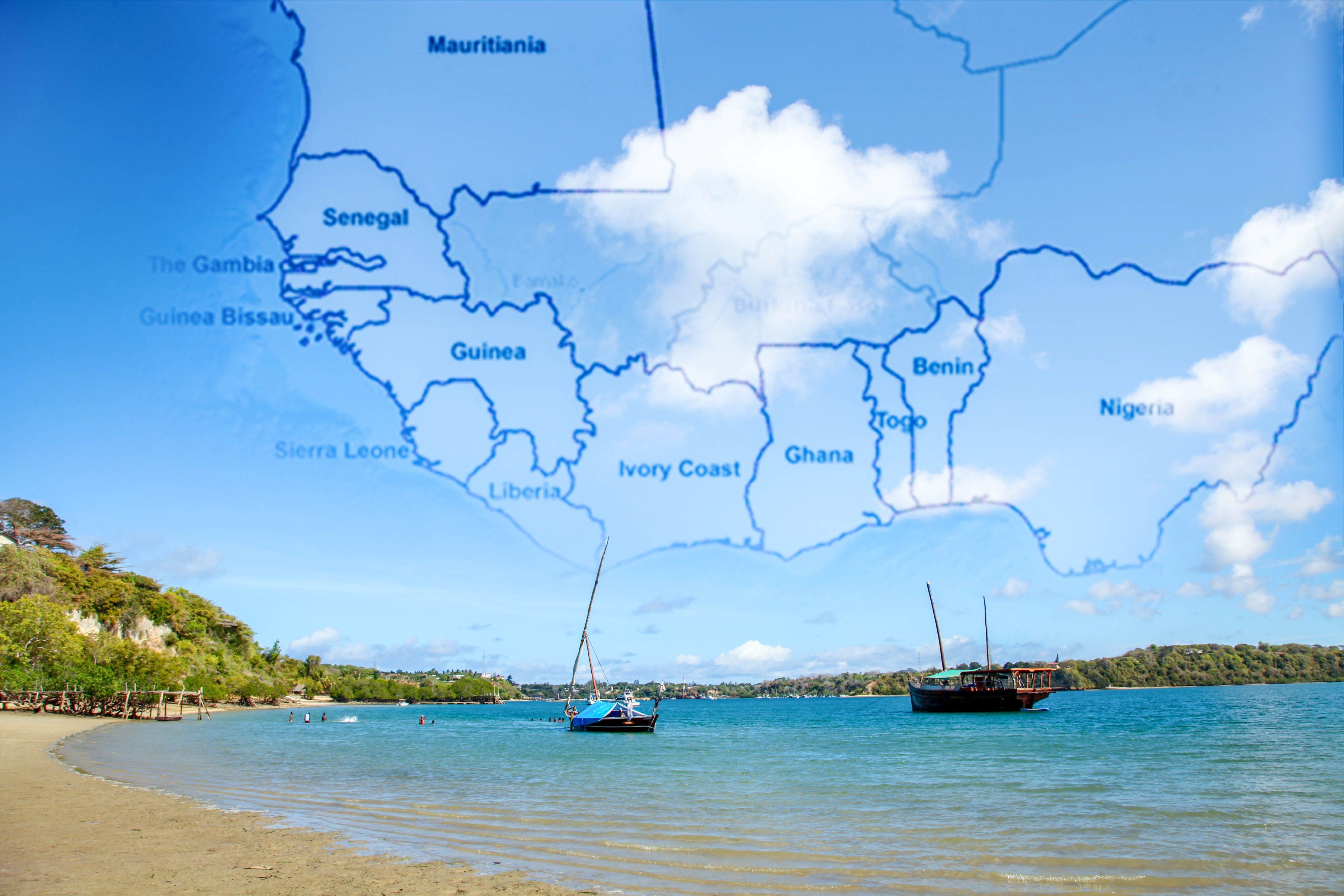
Early coordination is already underway, with Nigeria, Senegal, Sierra Leone, Guinea, and Guinea-Bissau working through a joint framework to develop the proposal, according to Mongabay.
The scale of the challenge is inherently transboundary. West Africa’s marine space spans thousands of kilometres of coastline and an exclusive economic zone exceeding two million square kilometres, while fish stocks move across jurisdictions and fleets can shift operations faster than national authorities can respond.
This interconnected geography links offshore ecosystems directly to inland economies, with rivers, estuaries, and mangroves supporting fisheries that underpin food systems and employment across the region.
For policymakers, the push toward a high seas protected area is therefore both ecological and economic, aimed at reducing value leakage while rebuilding long-term returns from marine resources.
Kennedy Adeoye, an ecological bioscience scientist at the University of Ibadan, explains that coordinated monitoring, enforcement, and governance are central to achieving that outcome.
“Marine protected areas without monitoring capacity could become paper parks. It is therefore important to build institutional and technological systems alongside legal frameworks,” he explained in an interview.
The proposal builds on existing regional frameworks such as the Abidjan Convention, which promotes joint management of coastal and marine environments, but extends cooperation beyond national waters into the high seas.
That expansion reflects a broader shift already visible across the continent. In the Western Indian Ocean, countries including Seychelles and Mauritius are advancing joint ocean governance models, while other regions are strengthening coordinated fisheries enforcement.
Ghana is on track to establish its first Marine Protected Area (MPA), a milestone over a decade in the making that will restore marine habitats and support coastal communities.
Dialogue Earth reports that countries including Gambia and Liberia, have in recent years stepped up efforts to establish policies protecting their surrounding marine resources.
Together, these efforts point to a gradual repositioning of African states within global ocean governance, from rule-takers to active managers of shared marine resources.
“If implemented effectively, the high seas MPA could reduce illegal fishing, rebuild fish stocks, and improve long-term economic returns from the ocean,” Adeoye said.
“The outcome, however, will depend on execution. Legal designation alone will not be sufficient without sustained investment in monitoring, enforcement, and institutional capacity.”
According to Mongabay, ECOWAS aims to finalise its draft proposal by the end of the year, ahead of the treaty’s first Conference of the Parties, with a process that includes scientific collaboration, capacity assessments, and regional coordination.
bird story agency