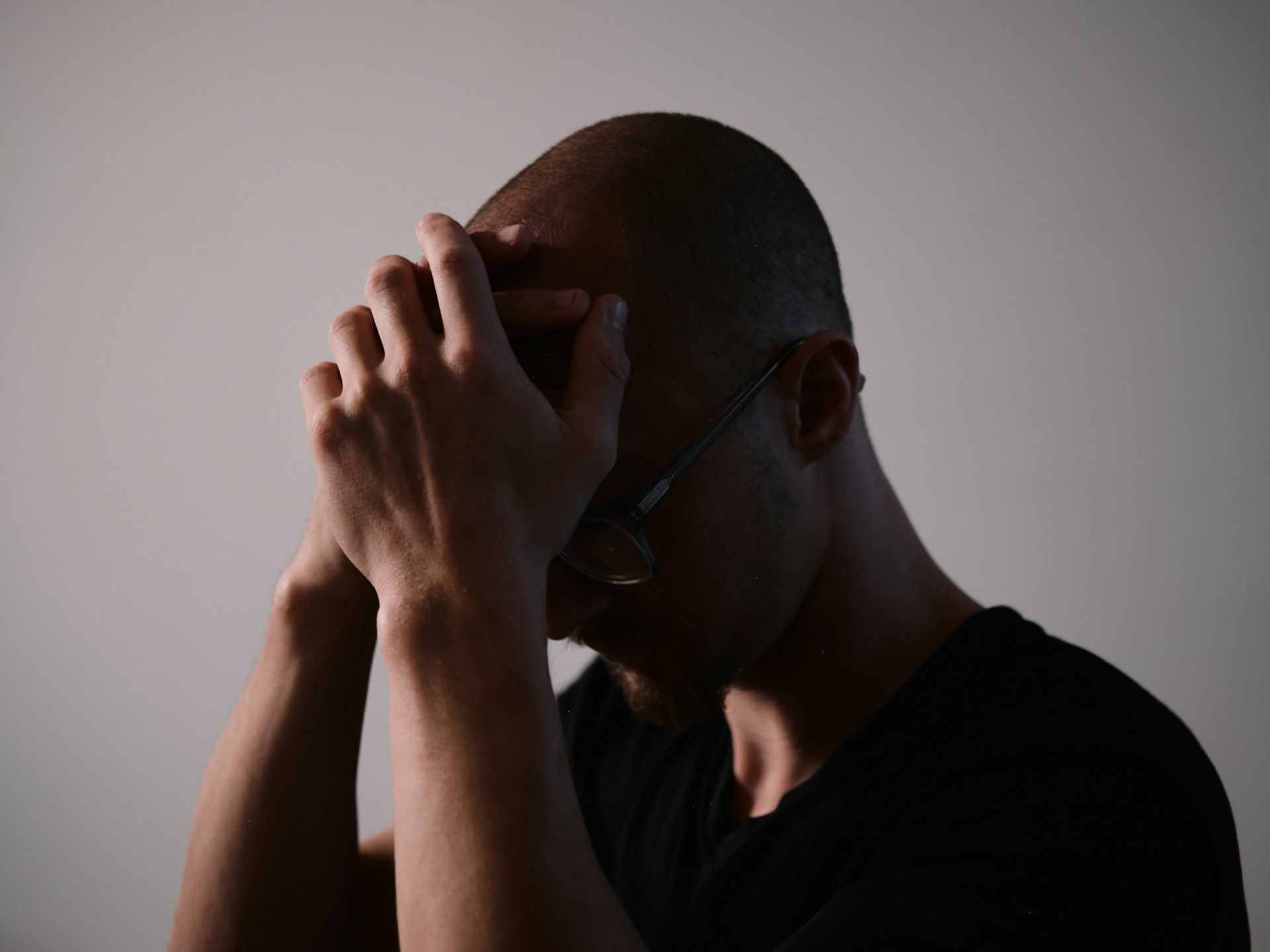

He stared into the distance for a long moment before answering. "I'm okay."
Two words. His voice was steady. His face wasn't.
I'd asked him that question before. Many times, in fact. "How are you? Really?"
The answer never changed. "I'm okay."
Occasionally, there would be a smiley face afterwards, as though an emoji could convince me where his words could not. There were days I believed him, and there were others when I could sense he wasn't okay.
His work had become relentless. The kind of work that forces people to make impossible decisions and then carry the consequences home with them. Sleep had become elusive. Some nights, the only way his mind would quiet down enough to rest was after several drinks. His laughter never changed when we were together, but his face was withdrawn. There was something dark lurking beneath the surface that he never spoke about. Yet every morning he got up and did it all again.
His family depended on him. His colleagues looked to him for leadership. People admired how calm he remained under pressure. Me being one of them.
At that moment as we spoke, he looked exhausted. His shoulders sagged with the weight of what he carried. His eyes glistened with unshed tears. His strong demeanour shed for just a few minutes.
That conversation stayed with me for days. Not because it was unusual. Because it wasn't. The more I thought about it, the more I realised how many men I've known whose default response to pain has been the same two words. I'm okay. Not because they have nothing to say, but because somewhere along the way, many stopped believing they were allowed to say anything else.
It is the universal default. Two syllables spoken with a steady voice, usually accompanied by a tight smile or a casual wave of the hand. We hear it from fathers, husbands, colleagues and friends.
But more often than not, ‘I’m okay’ isn’t a statement of health—it’s a shield. It is a defence mechanism designed to protect an image of invulnerability, and it is costing men their mental health, their relationships and their lives.

The conditioned identity: Value through utility
Nobody gathers young boys in a room to formally teach them to bury their emotions. It happens incrementally, woven into the fabric of ordinary life. A scraped knee is met with, "You’re a big boy now, don't cry." A teenager is praised for being the one who ‘never complains’. A man earns respect because he ‘always has the answers’.
Gradually, a dangerous equation forms in a young man's mind: Your value is entirely tied to your utility.
Society rewards men for being dependable, providing, protecting, and solving problems. These are not inherently bad values—resilience and responsibility are vital. The crisis occurs when a man’s identity becomes so fused with his usefulness that he believes he only matters when he is performing.
When usefulness becomes identity, vulnerability feels like a structural failure. If a man cannot provide, if he doesn't have the answer, or if he needs help, he doesn’t just feel stressed—he feels a profound sense of shame. He begins to ask himself: Who am I if I am not useful?
In discussions about masculinity, the concept of ‘stoicism’ is frequently weaponised or misunderstood. True emotional resilience and emotional suppression are entirely different strategies, yet many men have inherited the latter while believing they are practising the former.
Healthy resilience is the capacity to regulate emotion. It allows a person to face hardship without being dictated by their immediate impulses. It builds character and allows a man to navigate external storms with a clear mind.
Emotional suppression is the denial of emotion. It demands that a man pretend the storm doesn’t exist. It asks him to bury grief, silence fear, and disguise loneliness under the guise of ‘toughness’.
One builds structural integrity; the other builds internal pressure. Suppression doesn't make a man stronger; it just makes him isolated.
The fear behind the silence
We frequently ask, "Why won't the men in our lives just open up?" It is a well-meaning question, but it fundamentally misunderstands the risk assessment happening in a man's mind.
Men don't stay silent because they have nothing to say. They stay silent because they are terrified of what will happen if they speak.
- They fear becoming a burden to the people who rely on them.
- They fear losing respect or authority in their families and workplaces.
- They lack the language after decades of treating their inner lives as an afterthought.
This silence is intended to protect loved ones, but it accomplishes the exact opposite. Partners mistake emotional withdrawal for indifference or a lack of love. Friends stop asking because he's always ‘fine’. Children grow up with a father who is physically present and entirely dependable, yet emotionally unreachable.
Shame convinces a man that he must fix himself in the dark before he is fit to be seen in the light.
How we change the narrative
True cultural change won't come from social media awareness campaigns telling men ‘it's okay to talk’. It requires a fundamental shift in what we, as a society, choose to applaud.
Right now, we celebrate men for how much weight they can carry without collapsing. We praise the businessman who never switches off, the father who sacrifices his sanity for a pay cheque, and the leader who remains unnaturally detached under pressure. We call them strong when they are merely surviving.
To build an environment where men can actually step out of the utility trap, every part of a community has a role to play:
- Partners & friends: Move beyond surface-level conversations about sports, work or politics. Create spaces where a man can admit he is struggling without immediately jumping in to ‘fix’ the problem for him. Sometimes, the best response to a struggle is witness, not management.
- Parents: Teach boys that responsibility and vulnerability can exist in the same person. A boy who is allowed to cry grows into a man who knows how to process grief instead of drinking it away.
- Employers: Recognise that mental well-being is not a reward for high productivity; it is the baseline condition that makes sustainable productivity possible.
If you are the man reading this—the one everyone depends on, the one who carries the weight of the family, the business, or the team—you need to hear this clearly:
Your worth is inherent. It is not a wage you must earn through suffering.
You do not become less of a leader because you don't have all the answers. You do not become less of a provider because you are exhausted. You do not become less of a man because you need someone else to help carry the weight for a while. You simply become what you have always been: human. And no one should have to earn the right to be human.
The next time someone asks how you are, and your instinct is to say, ‘I'm okay’, pause. Take a breath. Allow yourself the courage to tell the truth.